
Transforming Right To Life

When you hear the words “right to life” you almost immediately think of courageous nonprofits like pregnancy resource centers where women who may be pregnant can make an informed choice. These centers are staffed by compassionate professional nurses and trained client consultants, usually faith-filled volunteers willing to advocate for both the woman and her unborn child, as well as for fathers and their families. Their loving concern is evident in situations that are often strained and confusing for the women experiencing an unplanned pregnancy.

Birthright Columbus on Skidmore Street is one of those centers. They are always free for clients, and rely solely on donations. They look to generous supporters to provide the all important material goods that fly out the door daily—boxes of disposable diapers, maternity clothing for moms, and every conceivable product for newborns from onesies to fuzzy blankets. Outright gifts of cash and goods to Birthright are crucial to their survival.

On East Dublin Granville Road in Columbus there’s another organization, the Greater Columbus Right to Life, whose mission is to promote a culture that protects human life (not just pre-born babies) from conception until natural death. In addition to their work to end abortion, embryonic stem cell research, euthanasia, and physician-assisted suicide, they also work to protect religious freedom and rights of conscience.

Both nonprofit organizations rely on donations to sustain their mission, and both are effective at reaching out to like-minded donors who give what they can to help keep doors open. What is more difficult to attract, but have larger impact, are the large transformational gifts needed for long-term planning, growth, and director salaries. For those donors with unique wealth, tax, income, and/or estate issues, giving can become truly transformational for both the giver and receiver, but also more complex.

There are life income gifts like the charitable gift annuity (CGA), the charitable remainder trust (CRT), the charitable lead trust (CLT), and the pooled income fund. When properly executed, these methods often satisfy estate and tax issues for donors.

Bequests can be as simple as placing a paragraph of instructions in a will, or adding a specific charity to their IRA or life insurance policy. Family foundations allow donors to keep their gifted capital intact while they make smaller annual charitable distributions.

These methods for charitable giving require a level of sophistication to fully understand and implement. Some require the help of an accountant, tax advisor, wealth planner advisor, and others. We recommend that if you are seeking, or merely curious, about methods for transformational charitable gifts, that you seek independent, objective advice about the legal, tax, and financial implications appropriate to your situation.

Should you consider Birthright of Columbus or The Greater Columbus Right to Life organizations for your gift, we hope that you will look to the Stewardship Foundation to lead the conversation.

NOTE: Stewardship Foundation is an underwriting sponsor for the Annual Banquet benefitting the work of Greater Columbus Right to Life taking place on Monday, June 13, 2016, at the Lausche Building, Ohio Expo Center, Columbus. You can learn more here.
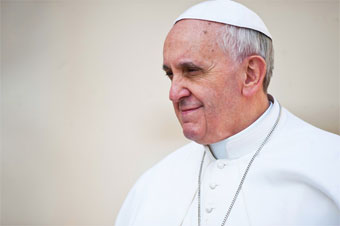
Amoris Laetitia Cliff Notes

Pope FrancisThe long-awaited-for document from Pope Francis finally arrived in my inbox. Reading Amoris Laetitia is mesmerizing, relaxing actually. It’s almost as though the man in white is sitting next to you, sipping peppermint tea on the porch, and asking us to meet people where they are, to consider that our moral compass is not the only one in the boat, and that other people’s moral decisions are theirs as much as ours are ours.

It’s meant to encourage us to love more and judge less; to make good decisions, to guide the Church’s pastors to a deeper level of understanding and mercy. It reminds all of us about the things in modern life concerning family and marriage that we so often get wrong, and helps us to discern what is morally right. It helps inform our conscience and is an excellent read.

I promised the cliff notes, so with a little help from America magazine, here they are:

  1. Judge not. We are not to judge others using rigid rules that leave no room for personal or pastoral discernment. Welcome all into church and treat all with mercy. Avoid thinking that everything is black and white. (305)
  2. Pray, then decide. Pastors are being asked to help people made good moral decisions about family and married life, not to simply and blindly follow rules, but to practice prayerful decision-making and follow an informed conscience. (304)
  3. Keep the door open. Pastors should never close the church door to the divorced or remarried, but encourage counseling to seek a degree of participation in the church. Dispel the old misunderstanding of excommunication of the divorced and remarried and help them to feel as being part of the church. (243)
  4. Love is valuable. Married couples, children, siblings, and relatives are not perfect and everyone has to put up with one another’s imperfections. Love doesn’t have to be perfect to be valued. (122, 113)
  5. Put down the rocks. Forget the phrase “living in sin” and all the moral judgements that we carelessly sling around. People living in “irregular situations” (like single moms and gay persons) need understanding, comfort and acceptance (49) not stones thrown at them.
  6. We are not all alike. Pastors need to be sensitive to someone’s ethnic culture and traditions because what makes sense in one country, doesn’t in another. It’s why every question can’t be settled by the magisterium, the church’s teaching office. (3)
  7. “No” on same-sex marriage. Marriage between one man and one woman is indissoluble; and same-sex marriage is not considered marriage. But what the pope wants is for seminarians and priests to be better trained to understand the real-world complexities of married life and to do better at counseling married couples. (36, 122, 202)
  8. Talk to kids about sex. Children must be educated about sex and sexuality. The world cheapens sexual expression and presents the body as “an object to be used.” (153)
  9. Respect gays. While same-sex marriage is not permitted, the pope wants us to respect the dignity of gay people and not discriminate against them unjustly. Families with LGBT members are to seek respectful pastor guidance from the church so gays and lesbians can “carry out God’s will in their lives.” (250)
  10. Have mercy. In this Year of Mercy the pope encourages all people to experience the “joy of love” and holds up the family as an essential part of the church, calling it the “family of families.” (80)

Thank you America magazine, Top Ten Takeaways from “Amoris Laetitia”, April 8, 2016, for helping us define the top ten issues facing Christian families.

Voting Pro-Life Is Not an Opinion

Vote Pro-Life badgeThe Stewardship Foundation was founded on Judeo-Christian principles of morals and ethics as laid out by the call of Christian conscience in 2009. Conscience is not the same as opinions or feelings. So on the matter of voting for a pro-abortion candidate, we must follow our conscience, regardless of how we “feel” about a particular candidate.

The taking of a God-given life is against natural law. It’s a matter of conscience, not opinion. It’s known by reason, not because it’s written down. Cain sinned when he murdered Abel long before Moses received the Ten Commandments. And Cain knew it was wrong to murder.

If a political candidate supports abortion, or any other moral evil, voting for that person makes us an accomplice in the moral evil at issue. So at this writing, where do the remaining committed candidates stand on abortion?

  • Hillary Clinton (D) Consistently fights against pro-life and believes women have the right to abortion for any reason.
  • Ted Cruz (R) Solid pro-life voting record since joining the Senate in 2013.
  • John Kasich (R) Strong pro-life voting record during 18 years in Congress, and has signed 16 pro-life laws as governor of Ohio.
  • Marco Rubio (R) Solid pro-life voting record during 5 years in the Senate.
  • Bernie Sanders (D) Solid pro-abortion voting record (over 100 times) in his career.
  • Donald Trump (R) Admits to being pro-choice in the past, but in 2012 declared himself pro-life after what he terms “a personal experience” with friends. He pledges to fight against the abortion-funding loopholes in ObamaCare.

So there it is. For those of strong moral conviction, we have but one choice this presidential election year: we must vote our conscience and cast our vote on the side of life.